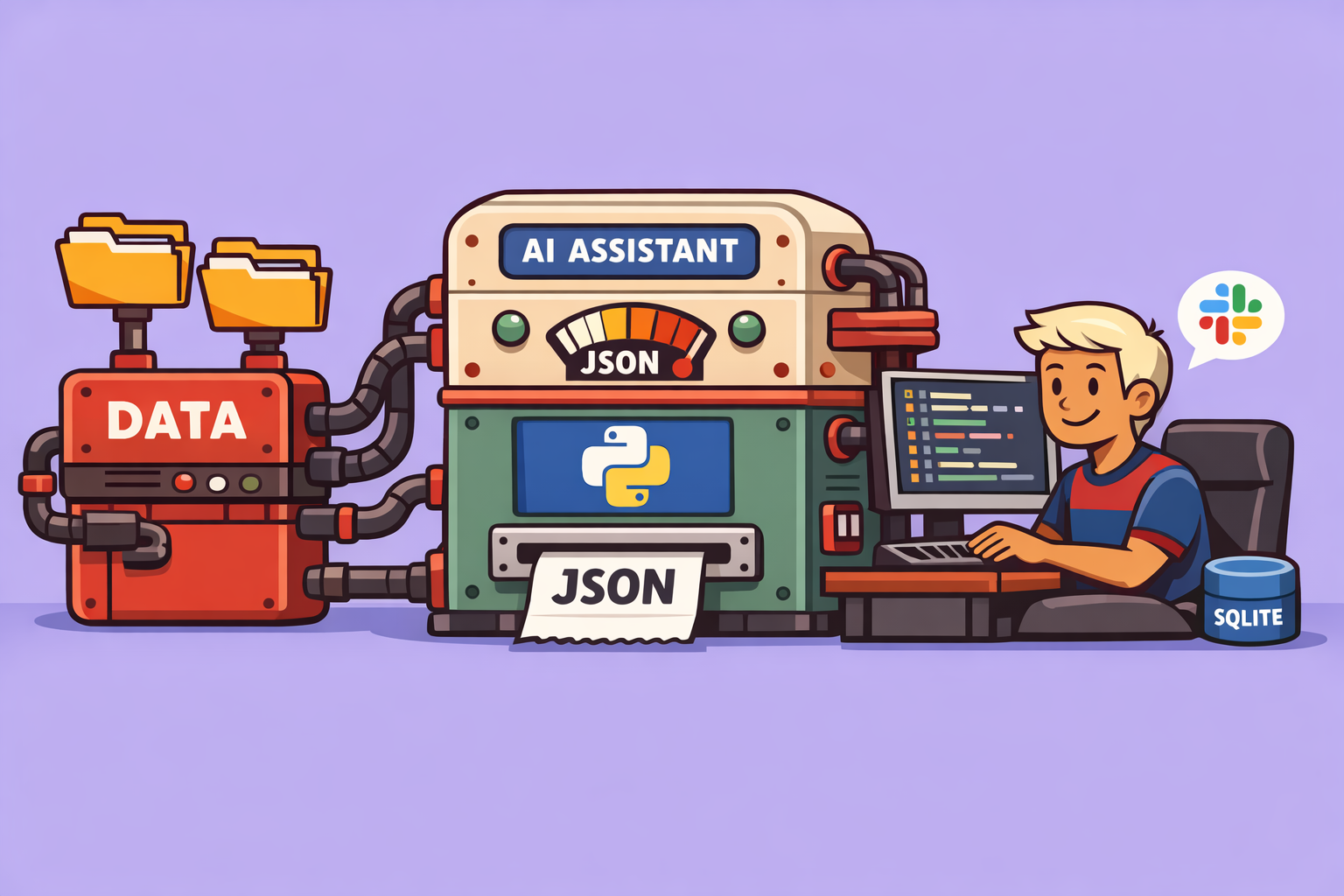
The rise of personal AI assistants has been nothing short of phenomenal, with one particular project, often lauded as the personal AI assistant, captivating the tech community. Its allure lies in its ability to understand user preferences, build a cumulative memory of ongoing work, and its fully open-source nature. However, its immense popularity has also shed light on significant security vulnerabilities, prompting many to consider building their own, more secure, and customized alternatives. This article explores the core concepts that make these advanced AI assistants so powerful and guides you through the process of creating your own personalized version, leveraging open-source inspiration while maintaining control and security.
The Double-Edged Sword of Groundbreaking AI Assistants
While the capabilities of leading open-source AI assistants are undeniably groundbreaking, they come with a substantial security overhead. Two primary categories of issues stand out:
- Architectural Vulnerabilities in the Codebase:
- Remote Code Execution Vulnerabilities: Recent discoveries have exposed one-click remote code execution flaws, allowing attackers to steal sensitive data and API keys with a single malicious link click. This vulnerability stems from the way authentication tokens are handled and the plaintext storage of credentials within the system.
- Malicious Skills Marketplace: Platforms designed for sharing “skills” or extensions for these AI assistants have been found to host hundreds of malicious packages. These packages, masquerading as useful tools, are designed to steal API keys, wallet private keys, SSH credentials, and other sensitive information, largely due to the plaintext storage of credentials.
- Over-Delegated Power to AI Agents: The sheer size and complexity of the codebase for these assistants mean that many users run them without fully understanding their internal workings. This, coupled with the extensive power granted to the AI agent, creates a significant security risk. Most users, it is argued, are not prepared for an AI agent to wield such broad control over their digital environment.
These concerns highlight a critical need for users to understand and control the solutions they deploy, tailoring them to their exact security and functionality requirements.
Deconstructing the Magic: Four Core Components
Despite the security concerns, the underlying ideas that make advanced AI assistants feel “magical” are highly valuable and can be replicated in a more controlled environment. There are four core components that contribute to this experience:
- Memory System: An elegant and simple, markdown-driven system for storing crucial information. This includes:
soul.md: The agent’s evolving identity.user.md: The user’s evolving identity and preferences.memory.md: Core memories that are maintained over time.agent.md: Global rules defining the agent’s behavior.- Session logs for daily tracking.
- A lightweight SQLite database with RAG (Retrieval-Augmented Generation) implementation for enhanced searchability over all markdown content.
-
Heartbeat (Proactive Nature): A mechanism that allows the AI to autonomously perform tasks without explicit prompting. This is typically driven by a
heartbeat.mddocument, which the AI consults at scheduled intervals to identify actions it can take that would benefit the user. The goal is to provide genuinely useful assistance, such as drafting emails or creating pull requests, rather than performing wasted effort. -
Channel Adapters: These enable communication with the AI assistant across various platforms like WhatsApp, Telegram, Slack, or Discord. The key is to have a flexible system that allows conversations to persist and be managed across multiple threads simultaneously.
- Skills Registry: A system where users can add new capabilities to the AI assistant, often through a single file. These skills can range from building front-ends to generating presentations. While the public sharing of skills presents security risks as mentioned, the concept of easily extending functionality is invaluable for personalization.
Building Your Own Secure and Personalized AI Assistant
The process of constructing a custom AI assistant that embodies these powerful features, while ensuring security and control, is more accessible than it might seem. Here’s a step-by-step how-to:
Step 1: Obtain the Blueprint
- Clone the Open Source Repository Locally: Since many leading AI assistants are open-source with permissive licenses (like MIT), you can clone their GitHub repository to access their underlying code and architectural patterns. This provides a blueprint for their effective features.
Step 2: Leverage a Coding Agent for Knowledge Transfer
- Point Your Coding Agent to the Cloned Repository: Utilize an AI coding agent (e.g., Code Code, or similar LLM-based coding assistants) and instruct it to analyze the architecture of the cloned repository.
- Instruct for Replication: For each core component (memory system, heartbeat, channel adapters, skills registry), ask your coding agent to explain how it works and then adapt it to your specific tech stack and requirements.
- Example for Memory System: “Explain how the memory system works in this repository. Now, build a similar memory system for me, optimized for my tech stack (e.g., Markdown for content, SQLite for local search, PostgreSQL for remote deployment, Obsidian for syncing).”
Step 3: Customize and Integrate Your Tech Stack
- Memory System:
- Storage: Use Markdown files (e.g.,
soul.md,user.md,memory.md,agent.md, session logs). - Database: Implement a lightweight SQLite database locally for efficient search and a more robust solution like PostgreSQL for remote deployment.
- Syncing: Integrate with tools like Obsidian for local syncing of Markdown documents, allowing quick local searches alongside remote AI capabilities.
- Underlying Technology: Utilize a coding agent (like Code Code combined with an Anthropic subscription) for cost-effective operation, ensuring compliance with service terms.
- Storage: Use Markdown files (e.g.,
- Heartbeat (Proactive Functionality):
- Scheduling: Implement a scheduled job (e.g., every 30 minutes) that invokes your AI agent.
- Prompting: Instruct your agent to analyze your memory, recent emails, calendar, and task lists (e.g., Asana) to identify urgent items or tasks that can be proactively handled.
- Integration: Use an SDK (like the Code Agent SDK for Python) to seamlessly integrate the AI’s operations into your Python scripts.
- Channel Adapters:
- Simplicity Over Complexity: While leading AI assistants offer numerous adapters, you may only need one or two that suit your primary communication methods (e.g., Slack for daily interactions, terminal for local commands).
- Architecture Replication: While focusing on fewer adapters, ensure the underlying architecture for adding adapters is easy to expand with your coding agent, allowing for future additions if needed.
- Skills:
- Built-in Skills: Leverage the inherent “skills” or function-calling capabilities often built into modern LLM SDKs (like Code Agent SDK).
- Self-Referential Skill Creation: Create a “skill to create skills.” This allows your AI assistant to generate new capabilities for itself simply by conversing with it, removing the need for a public, potentially insecure, registry.
- Security: By building all skills yourself, you eliminate the risk of downloading malicious packages.
Step 4: Iterative Improvement and Maintenance
- Stay Updated: Regularly review updates and new features from leading open-source AI assistants.
- Refine with Your Coding Agent: If a valuable new feature is introduced, pull the changes from the original repository and instruct your coding agent to adapt and integrate it into your personalized system.
By following this approach, you can harness the “magic” of advanced AI assistants while maintaining full control over your data, security, and the precise functionalities you need. This fosters a deeper understanding of your AI partner and allows for an ultra-personalized experience that evolves with your specific requirements.
🔍 Discover Kaptan Data Solutions — your partner for medical-physics data science & QA!
We're a French startup dedicated to building innovative web applications for medical physics, and quality assurance (QA).
Our mission: provide hospitals, cancer centers and dosimetry labs with powerful, intuitive and compliant tools that streamline beam-data acquisition, analysis and reporting.
🌐 Explore all our medical-physics services and tech updates
💻 Test our ready-to-use QA dashboards online
Our expertise covers:
🔬 Patient-specific dosimetry and image QA (EPID, portal dosimetry)
📈 Statistical Process Control (SPC) & anomaly detection for beam data
🤖 Automated QA workflows with n8n + AI agents (predictive maintenance)
📑 DICOM-RT / HL7 compliant reporting and audit trails
Leveraging advanced Python analytics and n8n orchestration, we help physicists automate routine QA, detect drifts early and generate regulatory-ready PDFs in one click.
Ready to boost treatment quality and uptime? Let’s discuss your linac challenges and design a tailor-made solution!
Get in touch to discuss your specific requirements and discover how our tailor-made solutions can help you unlock the value of your data, make informed decisions, and boost operational performance!
Comments